Showing posts with label war. Show all posts

Film Review: American Sniper (2014)

Copyright: Warner Bros. Pictures
There are three types of men, American Sniper teaches us. These are the sheep, which can’t defend themselves, wolves who are the predators, and the sheepdogs. The last kind of people is “blessed with aggression”, but only uses it to protect the sheep.

The sheepdogs, however, apparently also make substantially problematic main characters in war dramas. From the beginning, we watch Chris Kyle, the deadliest recorder sniper in the US history, fights his way through life and war. Kyle is a simple dude who only wants to protect his buddies in the field of battle, and does the same with a very clear consciousness.

Clint Eastwood directed this film, but like Kyle’s life, he meandered from the US, where Kyle produces a family, but seems to be truly living only when he is in Iraq behind a scope, looking for people who hold a possible weapon. As a documentary story, the film is significantly misguided. For dramatic purposes, we only see a single US helicopter fire off a single missile during the course of the entire film. The rest of the Iraq fighting takes place assault gun to assault gun, which makes the Iraq war a lot more poetic and fair than it truly was.

In fact, there is no massive presence of US armor or aerial bombardment shown, because the insurgents need to look as if they are an equal adversary to Kyle and his buddies. Historically, a lot of American lives were lost in Iraq, but American Sniper makes the conflict look like Vietnam in a desert urban environment, which it simply was not.

The same is true for many other elements of the film, where Eastwood ignored a lot of stuff that didn’t fit into his plan of making a baseball cap wearing All-American hero. Kyle has some pale emotional doubts, but no political inkling of any kind. He kills gladly and proudly, until he decides he had enough, even though his family begged him to stop (this is explained with a manufactured insurgent boogeyman that eludes him, but this fails to make any impression).

Finally Eastwood, who detailed examined the lives Kyle took through violence during his deployments, decided not to explore the moment when his own life was taken in this manner. This final moment of dual intentions is similar to the transparent flag seen on the film’s poster. Although there is some matter and meaning there, the true essence of this film is to tell everyone that it was all worth it, even though there is nothing there to be shown.

The American Sniper movie is a weak action film that drives a faulty message.

Film Review: Fury

Copyright: Columbia Pictures
When you break it down, movies are here to provide us with a transient experience. For their duration, they are here to take us to a new place and present to us the things that are going on over there. The more sensations movies encompass, the better – on the simplest level, we see and hear things that are present on the screen. At its best, cinema allows us to feel things that are taking place over there.

Fury allowed me to experience a nauseating 130 minutes of World War II. During this time, I was completely transported to western Germany, where a tank crew is going through the last month of the war. Although it is clear that the Nazi Germany is sinking into the mud covered ground, elements of the SS are still refusing to lay down their arms.

The tank, called Fury, is led by Don Collier, an emotionally wrecked man and a perfect warrior. The rest of the crew also saw much action on two continents, and it shows. One day, their comrade is killed, and Norman, a trained clerk, comes to take its place, still fresh from boot camp. All along, the killing and the dying continues. Still, no matter what, Fury presses on.

During the film, I was competently oblivious of my personal feelings and thoughts. I just watched, often in horror, what happens to the crew of that single tank. I didn’t pass judgment on what I saw, or thought about what I would do in a similar situation. I didn’t have time to do any of that, because the sheer visceral feeling of a war where machine guns cut people like meat (how they are often referred  to in the film) and white phosphorus burns people alive.

David Ayer, who recently directed the solid End of Watch, now presents something incredible cruel, almost demonic in nature, but that is also at the same time completely understandable. He cleared the film of any grandeur which seeped into movies like Saving Private Ryan or at times overflowed in movies like Lone Survivor. Even when things seem to be heroic, we are quickly reminded that death in a war is never a thing of beauty. The same is reflected in the characters, especially Norman. He tries to remain human, but there is no point, he can only become what is needed or he can die. Other options are simply not there on those muddy, bloody fields.

There are several fantastic supporting roles in this film, and for the first time, I truly see the real, adult potential in Shia LaBeouf as the Bible quoting Boyd. He and Michael Peña produced amazing results, and I’m forecasting an Oscar nomination for one of these guys. I am certain that they both deserve it.

I am also certain that a lot of the film's impact will be drowned in the waves of historical accurateness,  and simultaneous accusations of American flag waving and unjustified slander of the US army. This is unfortunate because Fury movie transcends any controversial issue like the killing of POW by the US forces. In war, Fury tells us, we are both the meat grinder and the meat. But I managed to extrapolate that only later on.

During the film, I just witnessed it, and that is what makes this movie a masterpiece. Watch the movie Fury and feel the horror that is war.

Film Review: The Monuments Men

Copyright: 20th Century Fox
This wasn't the way to make a war film, or any other kind of film. The Monuments Men just doesn’t know how to connect the audience with its characters or its topic, although George Clooney tries desperately to do this. But, he does it by the old Hollywood playbook, first by introducing a merry band of men that are to form an Allied unit in the last stage of the 2.

World war, tasked with the protection of cultural treasures of Western Europe. Then Clooney, playing the lead character and directing at the same time (when you’re good looking you can do anything), further develops his Dirty Dozen Artists and Museum Curators, giving us the French guy, the Matt Damon guy, the Funny guy and the Cynical guy to somehow bind us to them.

This doesn’t work. There are too many of them, and it doesn’t matter that Bill Murray and John Goodman play them, they aren’t relevant enough to become important. Even worse, Clooney sends some of them to a secret mission in the German occupied France, and naturally this adds to the incoherence of the film.

Throughout the movie there is this sense of following the real history (Monuments Men did really exist in the WW2), and using things that belong in a mediocre war film from the seventies. The soundtrack includes a lot of whistling, everybody is more than enthusiastic to go into the front lines (even those who are fat and/or old) and the Soviets seem a little bit like Nazis 2.0.

Also, I have a feeling that at a three-man team took care of Clooney’s mustache, and that this part of the superstar’s facial hair probably had a nickname like The Champ. Small adventures, some tragic, other heartwarming or funny, continue while the Monuments Men are on the trail of a big art loot that was taken by the retreating Germans.

The film drags on in this fashion. The script wasn’t convincing enough to make me truly care about any of the art that is present in the film. Instead of focusing on one piece, things like the Ghent Altarpiece or Madonna of Bruges get thrown in, and soon the number of art pieces is as big as the cast. Add to this the idea that millions were killed in the same time, and it’s pretty hard to be emotionally invested in paintings, even with a powerful speech on this topic delivered by Clooney and his spectacular mustache in the beginning of the film.

The whole topic was better suited for a documentary film. Instead, the result is a dramatization on a large budget that produces almost no emotional investment. Let’s just hope that Clooney doesn’t shave off his glorious mustache, because in that case, the whole Monuments Men project would be in vain.

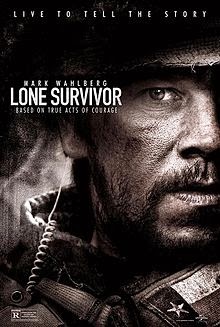
Film Review: Lone Survivor

Copyright: Foresight Unlimited
If you know how the movie ends, does it spoil all the fun? Well, no. A lot of times the movies start from the end of the story and work their way backwards. Lone Survivor is a type of film, which doesn’t regard the intrigue of the end as something really important. The whole plot of a Navy Seal mission in Afghanistan that went from bad to worse is a true historical event and is well-known, even notorious because of the lost American lives (Afghan live were also lost in great numbers, but those guys don’t have Hollywood so screw them).

Peter Berg directed this film in a way that is extra safe. It focuses on the camaraderie and the almost suicidal willingness of the Navy Seals when it comes to following orders. Berg stays away from the question what were those guys even doing in the Afghan mountains, fighting a war against the Taliban. To the soldiers, those enemies could be Martians or the British regulars; it just doesn’t matter, because they have to die.

The film, like its characters, doesn’t ask questions when there is killing to be done. In the sub context, Berg is acted as  an ideal Hollywood soldier for Pentagon; even if he did present a short conversation that occurs when the team encounters civilians and briefly discusses whether should they execute them or leave them to compromise the mission (I bet this was done purely to give the story a little gritty credibility). Matt 'Axe' Axelson, played by Ben Foster, is all about killing them (maybe because he did the same thing before), but the CO decides to let them go.

Of course, Matt is soon proved right and one of the civilians runs to the Taliban HQ to raise the alarm. So kids, when you get the chance to spread the mighty wings of American liberty in some third world country in the coming years, don’t forget to take care of those loose ends by shooting them in the head.

The action parts of the film are gripping and interesting to watch. Of course, every Seal member can take around ten body shots (even one or two head shots) before dying, and every Taliban goes down after maximum of two. I guess this kind of ratio was inevitable because of the opposing strengths – four against at least one hundred means that the Taliban have to do more dying, and the Seals more killing. The thing that impressed me the most was the realistic way of tumbling and falling that the team members experienced while running from the enemy, when I could almost feel the bones crunching. Berg shot and edited these sequences brilliantly.

The last subplot follows the moment when Marcus Luttrell, played by Mark Wahlberg, gets rescued by the local tribesmen who are bound by their ancient law to give him protection, even from the Taliban. This should have been the focus of the film, but Berg probably decided that would be unpatriotic, and instead invested all the energy in telling us how Navy Seals guys are awesome to the max. The bravery of the Afghans who decided to risk their entire village for the protection of an invading army soldier got the backseat in this ride.

Lone Survivor is a slightly more realistic and colorful version of the film Act of Valor. Both glorify the Navy Seal way of making war, and teach us that killing for Uncle Sam and asking questions, don’t mix well together in life and on the big screen.