Showing posts with label Biography. Show all posts

Film Review: Love & Mercy (2015)

Copyright: Roadside Attractions
The goal of the Love & Mercy and its director Bill Pohlad are clear from the first moment of the film, which show John Cusack as an older Brian Wilson of the Beach Boys who wants to buy a car somewhere in the 1980’s. Wilson, now an unrecognizable middle-aged man, lost all of this drive and creativity that help him create one of the most successful bands in the U.S. history.

Deeply troubled by emotional issues and under the constant supervision of a strange psychotherapist, Wilson loses days and months, maybe even years in a haze of prescription drugs and complete lack of interest in anything in the world around him. Then, without any warning or sign, the story rewinds 20 years into the past, where the young Brian, now at the top of his game, desires to make an incredible album which will break away the Beach Boys from their fake surfer vibe he gradually came to despise.

But at the same time, his mind is eroding, accompanied by audio hallucinations and deterring emotional stability, which is additionally fueled by drug use. At both times, Wilson tries his hardest to follow his vision and share the love he feels with people around him but ends up isolated in the world that is becoming more and more distant to him.

Pohlad made Love & Mercy in a way that really underlines Wilson’s musical genius and his ability to expand the realm of popular music when no one asked or expected that of him. The film shines while it shows famous Beach Boy’s songs being made in the studio and Wilson, who is terrifically portrayed by Paul Dano, both lost in his miraculous world of sounds and terrified by the things he suspects are coming. Unlike the, for example, Benedict Cumberbatch's uneven presentation of Alan Turing in The Imitation Game, Dano makes Wilson’s instantly connectable, even when he’s losing his mind. Because of this, all those who love or at least know these songs will definitely feel at least a spark of jubilation while they watch how Good Vibrations or some other track slowly come into existence. At the same time, they will also some other darker emotions, seeing in what agony they were created.

Pohlad, who isn’t new to movies but is new to directing, can’t evade the lure of the regular protagonist-antagonist plotline, which dampens the part of the story which takes place in the 1980’s. Here, Dr. Eugene Landy is depicted as a tyrant and a madman who keeps Wilson down, while his newfound girlfriend tries to pull him out of this toxic relationship. Paul Giamatti does a great job as Landy, but I feel that this part of the script failed an otherwise wondrous film by making sure the audience had a bogeyman to hate. Like the Wilson’s real life, I feel this uncalled-for Hollywoodization of his story only subtracted from it but didn’t add much an aside of the cheap thrills of having a bad guy in this musical biography.

There is no doubt that the mind of Brian Wilson was and probably still is a marvelous and terrible place. As a gentle soul who wanted to give people the gift of music, he got a life that had way too much suffering and pain. Love & Mercy might not do him justice in every possible way or as much as he deserves, but it is still a window into a fascinating man. It is clear that the world needed that window and having it is a joyful occasion.

Film Review: Wild (2014)

Copyright: Fox Searchlight Pictures
At some moments in this film, I felt that something very wrong is about to happen. For example, a woman all alone in a desert is about to jump across some large rocks. I was almost compelled to say out loud to the main character of this film:

“What are you doing, haven’t you seen the 127 Hours? Keep it up and you’ll have to cut off your hand with a pocket knife!”

This alone is a big cinematic achievement. In it, its director Jean-Marc Vallée made a devious pack with Nick Hornby, who wrote this screenplay. With Hornby’s talent for making sad tales engaging to a point where Disney went when they killed off Bambi’s mom, Vallée created an inspirational story which doesn’t state the obvious and doesn’t pamper us in happy-go-lucky feelings. Not all the way, at least.

The tale, based on the true adventures of Cheryl Strayed, a woman who hiked the Pacific Crest Trail accompanied only by uncomfortable shoes and some camping gear, is really unique. In it, this trail, which wasn’t really famous outside the die-hard hiking community, plays an equally important role as the main character. Its beauty and indifference are stunning, captivating, and perfect for Vallée to transform it into a mirror for the protagonist, who is in a deep spiritual, emotional and personal crisis.

Cheryl is played by Reese Witherspoon who acts her heart out and it really shows. Along with Hornby’s writing, she made sure that her character didn’t become some bland heroine who is determined to show the nature who is the boss. Instead, her Cheryl is someone who is much realer and a lot faultier than the average nature conqueror.

But, while Wild is a very stunning movie that draws you in a very poetic way, I was really impressed with the director’s readiness to make the film more gritty. Using frantic editing and cuts, he obviously became even more advanced in his trade since he made Dallas Buyers Club.

Still, I feel underneath that underneath all of the grandeur and greatness, there is still that sticky touch of Nick Hornby. While films like All Is Lost have that moment where the viewer is captivated and terrified by the collision of nature with a single human being, throughout this film, there is the slightest but the constant feel of that undercover Disney approach Hornby does so well.

This is why the film forced a verbal ending and few epilogue-type sentences on how all of this fits together, ignoring the fact that it could have ended without it. But then, in that case, the audience might be just a bit less satisfied and a bit more confused, and Hornby just couldn’t let that happen.

Movie Review: The Imitation Game (2014)

Copyright: The Weinstein Company
Alan Turing had it rough, but it was all kind of worth it. This is, in a nutshell, the idea that I got from the film The Imitation Game. This story about the king of computer geniuses of the first half of the 20th century is very polished and the cherry on its top is Benedict Cumberbatch, who is a great actor and the next gigantic crush for all those boys and girls who really loved Ryan Gosling before he became really popular.

Yes, everything is here and all it very compacted and easily digestible, but somehow, for me, something was very lacking and very off in this film. Its director, Morten Tyldum, had a similar effect on me with his previously best-known film Hodejegerne. In it, just like in The Imitation Game movie, I have a feeling that Tyldum strives for bedazzlement and charm, all in a desperate attempt to leave the audience without too many questions, mainly, what did we really learn about its main characters?

Here, the same problem arises. What drives Alan Turing and why is practically everyone his enemy or at best, passing annoyance? The film provides two parallel vectors that never merge into a single human being: one side of Turing cares only for his machine that can decipher the Enigma code, while the other side is forever haunted by his personality that is simply unwelcome in that time and place (primarily his sexual orientation).

Here, the film backs off, not allowing Cumberbatch to make a choice as Turing. He is neither fine with who he is nor is he tormented by it. He is calculated and even cruel in his worldview, but offers a soft human side on practically every corner. He desires to make beautiful computers that can become aware one day, but he also desires to find boyfriends in the local pub. He is everything that the real Turing was supposed to be, but nothing of this truly defines him, mainly because the film doesn’t show him sacrificing anything willingly. Things and people just fall out of his life, but he marches on, even when his supposed life purpose is completed.

A lot of Tyldum’s careful constructed facade that plasters the inherent emptiness and gutlessness of the film is seen in its soundtrack. At some moments, it is sad, while other times it is cheerful, but throughout the film, it remains very whimsical, as if it seeped from a blockbuster film like Gravity, where the music is used to underline the pacing of the action for those who have trouble concentrating on it while they make out, eat popcorn or use their smartphones.

I don’t know much about what kind of man Alan Turing was, but I am also certain that I learned or felt nothing more about him after I watched The Imitation Game.

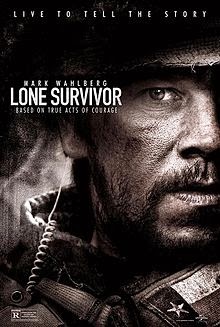
Film Review: Lone Survivor

Copyright: Foresight Unlimited
If you know how the movie ends, does it spoil all the fun? Well, no. A lot of times the movies start from the end of the story and work their way backwards. Lone Survivor is a type of film, which doesn’t regard the intrigue of the end as something really important. The whole plot of a Navy Seal mission in Afghanistan that went from bad to worse is a true historical event and is well-known, even notorious because of the lost American lives (Afghan live were also lost in great numbers, but those guys don’t have Hollywood so screw them).

Peter Berg directed this film in a way that is extra safe. It focuses on the camaraderie and the almost suicidal willingness of the Navy Seals when it comes to following orders. Berg stays away from the question what were those guys even doing in the Afghan mountains, fighting a war against the Taliban. To the soldiers, those enemies could be Martians or the British regulars; it just doesn’t matter, because they have to die.

The film, like its characters, doesn’t ask questions when there is killing to be done. In the sub context, Berg is acted as  an ideal Hollywood soldier for Pentagon; even if he did present a short conversation that occurs when the team encounters civilians and briefly discusses whether should they execute them or leave them to compromise the mission (I bet this was done purely to give the story a little gritty credibility). Matt 'Axe' Axelson, played by Ben Foster, is all about killing them (maybe because he did the same thing before), but the CO decides to let them go.

Of course, Matt is soon proved right and one of the civilians runs to the Taliban HQ to raise the alarm. So kids, when you get the chance to spread the mighty wings of American liberty in some third world country in the coming years, don’t forget to take care of those loose ends by shooting them in the head.

The action parts of the film are gripping and interesting to watch. Of course, every Seal member can take around ten body shots (even one or two head shots) before dying, and every Taliban goes down after maximum of two. I guess this kind of ratio was inevitable because of the opposing strengths – four against at least one hundred means that the Taliban have to do more dying, and the Seals more killing. The thing that impressed me the most was the realistic way of tumbling and falling that the team members experienced while running from the enemy, when I could almost feel the bones crunching. Berg shot and edited these sequences brilliantly.

The last subplot follows the moment when Marcus Luttrell, played by Mark Wahlberg, gets rescued by the local tribesmen who are bound by their ancient law to give him protection, even from the Taliban. This should have been the focus of the film, but Berg probably decided that would be unpatriotic, and instead invested all the energy in telling us how Navy Seals guys are awesome to the max. The bravery of the Afghans who decided to risk their entire village for the protection of an invading army soldier got the backseat in this ride.

Lone Survivor is a slightly more realistic and colorful version of the film Act of Valor. Both glorify the Navy Seal way of making war, and teach us that killing for Uncle Sam and asking questions, don’t mix well together in life and on the big screen.

Film Review: The Wolf of Wall Street

Copyright: Universal Pictures
Martin Scorsese made The Wolf of Wall Street in a way I can only describe as entirely organic. As I watched the story of Jordan Belfort, a New York stockbroker who enters the financial scene in the 80’s and soon becomes one of the biggest (and weirdest) success stories around, I didn’t feel like its director had to make any compromises. The film’s rhythm is frantic, and things happen in every minute; as Belfort starts to expand his empire, his appetites also grow, and women, drugs and financial criminal shortcuts start to play a big part of his life. He enters the realm of penny stocks and in a matter of months gains a fortune. Naturally, others get drawn to him like moths to the light of a burning stack of money. Things pile up as his life progresses, and in no time the FBI gets involved.

Things start to get really serious for him, but Scorsese still felt totally okay with taking a 20 minute slapstick break in the middle of the film, when he presents how a Belfort, overdosed on sleeping pills, tries to get to his home and stop his partner from making a potentially huge mistake. In other films, this kind of switch would look stupid and probably forced, because the rest of the film feels very intellectual (in spite of the crude language and nudity), but Scorsese didn’t mind doing it, and it paid off. The Wolf of Wall Street in truly hilarious, and the range of humor (from people falling down and drooling on each other to the ridicules way the characters dodge questions asked by financial regulators)  it presents most likely consolidated its impact.

The creative ease Scorsese brought to the film can be seen in another aspect. For example, Belfort often speaks to the audience, but not continuously. We can hear his inner monologue, as well as monologue from other characters, but there is no pattern and this doesn’t only apply to supporting roles. A lot of time the monologue is only a passing sentence or a single phrase. It’s obvious that Scorsese didn’t force anything into a preset frame, but did it when it when it felt natural.

The cast did something similar. In the film, Jordan Belfort has several long motivational speeches, and the best of them reminded me of the character Frank T.J. Mackey from the movie Magnolia. DiCaprio, who plays the foul-mouthed Belfort, made them powerful and raw. Here, the DiCaprio/Scorsese synergy really kicks in, and we as an audience cannot deny the magnetism of the character and his relentless enticement that beckons everybody to join him on the road of never-ending greed and money.

Other actors were equally good. Jonah Hill plays Donnie, Belfort’s right hand man and an even bigger dope fiend than his boss. He already showed in Moneyball that he can step out of the comedy genre while staying funny and it’s no surprise he shines here too. Rob Reiner also impressed me, especially in the way he works with people who are decades younger than him.

Scorsese made a film about Wall Street, but his skill and freedom he has been granted allowed it to break the every negative expectation I had before I saw it. It’s not like Wall Street: Money Never Sleeps or any other contemporary film about the greed and excess of the most famous site in the financial universe. It doesn’t mind looking silly and goofy, and that’s exactly why it’s so great both as a comedy and a grim presentation of the people who have the power to financially ruin millions across the globe.

Film Review: Captain Phillips

Copyright: Columbia Pictures
In the entrance sequence of Captain Phillips, we witness a conversation between a wife and a husband. The husband is a maritime captain, and his wife is escorting him to an airport, from where he will set out to his next voyage. During their drive, they talk about how the world has changed and who their children will have a rough time in their adulthood.

For me, this was an awful way to open the film. The conversation tells us nothing about Phillips, or his wife. They sound as if they are practicing the lines from the beginning of an SNL sketch, right before one of them declares that she or he wants to join the circus or something ludicrous like that. There is no emotion that rings true, except perhaps a hint of subdued boredom from a decades long marriage. Tom Hanks, who plays Phillips, presents the same thing in this role – something seen and done many times by him, combined with an ever-present feeling of tiredness. The real is described by some of his crew as reckless, but here all of that was condensed into unintended bravery. Because the movie didn’t want to get political, I guess.I wondered to myself in that moment: if Paul Greengras, the director of this film had so much trouble presenting a regular middle-aged man from the US, how on Earth will he depict the Somali pirates?

The answer to that question is simple – he didn’t. Somalis that try to hijack the ship captained by Phillips are total stranger. Apart from their habit of chewing khat and vague references to their long vanished fishing lifestyle, the film steers clear of their motives or basic personalities. To be honest, they aren’t vilified, but in glances, we see them as ruthless, then childish, then scared, then crazy or indifferent. This may seem like a variety of human traits, but it actually manages to present an extremely hazy picture. I don’t feel like it was left to the viewer to decide who they actually are, but more likely, it had been deemed as unimportant. The pirates are just there, like a bad storm on the open sea.

On the other side of the action, there is the crew and their captain, supported by the American and British navies, equipped with enough firepower to sink the Spanish armada. Here, Greengras shows his military command and control fetish, and he dazzles the audience with the images of operating rooms, warship bridges and other battle stations. Navy people call other navy people, orders are given and someone is always counting down to something. This is where he obviously feels like home, and it’s not surprising after so many years in the Born films.

The problem is that even here I felt no suspense and no thrills. This film is a live-action, big budget documentary with Tom Hanks in the main role. After it, unlike after watching A Hijacking which left me intrigued and concerned, I felt mildly amused. Like its portrait of Somali pirates, Captain Phillips presents to its audience an emotional blank.

Review: The Iceman

Copyright: Millennium Films
This review will be mostly about Michael Shannon, because this movie is almost entirely about him. His acting is a skill honed to perfection, and it clear in every second he spends onscreen. Every single look, posture or a pause between his sentences speaks for itself about Richard Kuklinski, a ruthless contract killer from New Jersey. The Iceman begins when young Richard meet his future wife for coffee in the sixties. In that point in his life, he is only a small-time employer in a porn film lab owned and operated by the mob. Because of the violent reputation he acquired in the dingy pool halls of Jersey City, a chance meet with a mob underboss becomes an opportunity for a career change. He soon becomes known as the Iceman.

Without Shannon, the director Ariel Vromen would be left with a generic mafia movie script. The story covers almost three decades and has a lot of supporting characters we don’t get to know before they get murdered. Instead of placing Kuklinski in a fixed point, from where the audience could travel back in flashbacks, Vromen tells his story by flashing a light on the hitman’s life from year to year. Thanks to of this vanilla approach we see Kuklinski getting older and witness how he changes the style of his haircut and the matching sideburns-mustache-beard combo, but see very little of how he became a calculated monster with a soft touch for his family.

It seems to me that Vromen noticed this problem in one point, and tried to fix it with a few seconds long flashback to his childhood, and the short episode where Kuklinski talks to his brother who is serving a long prison sentence. This didn’t do it for me, and still seems like a wasted opportunity. Instead of a look inside of a special kind of killer, we got Goodfellas made for TV with an accent on murders. Even Ray Liotta is present in the cast as a mob boss!

But Shannon’s talent saves the day. The man is obviously incapable of failing as an actor, and every one of his characters is memorable in some way. In recent years, even his role as the southern diver slacker Galen in the movie Mud made an impression on me. As the Iceman he has the liberty to go all out and show us in real-time what Vromen and the writers failed to do.

He commits murder with his eyes, with the tone of his voice. He is simply made for killing, and it’s what he does. The only missing element in the Kuklinski puzzle is his adoration for his wife and daughters. Because of them (or better said, thanks to them), he never crosses the line and becomes a full sociopath, devoid of feelings towards other people, in spite of the fact that he killed over 100 human beings. Shannon resolves this puzzle by showing a man who, as he puts it, in the end, asks only for the forgiveness of his family, knowing he will not get it.

He continued to ask because he felt that he had hurt people who meant everything to him, who were in fact the only people who meant anything to him.